Remaining the most sought-after coding language globally, JavaScript is the backbone for multiple products, from websites to interactive apps. Its use is feasible for both front-end and back-end tasks, so it’s not a wow factor that, according to Stack Overflow statistics, over 62.3% of developers worldwide use. Yet quantity does not always mean quality, so when you need a skilled JavaScript pro, it can be tricky to find a diamond in the rough. This is especially relevant for Junior JS developers, because their professionalism levels can be questionable.
That’s why proper preparation for interviews with Junior JavaScript candidates is profitable for headhunters, and they often have a list of questions to ask. Being a candidate requires you to be ready for any tricky question, so we have made a part of this job and offer you a comprehensive list of the top 7 JavaScript technical questions you can use as your guideline while preparing for your JS Junior interview.
Core Technical Questions to Ask a Candidate
Let’s get a comprehensive overview of what you can be asked during the Junior JS interview.
Task 1
You get a sample of code and three main questions about it:
1. Is it workable?
2. Does the sample have some shortcomings?
3. If there are flows, how can they be improved or optimized?
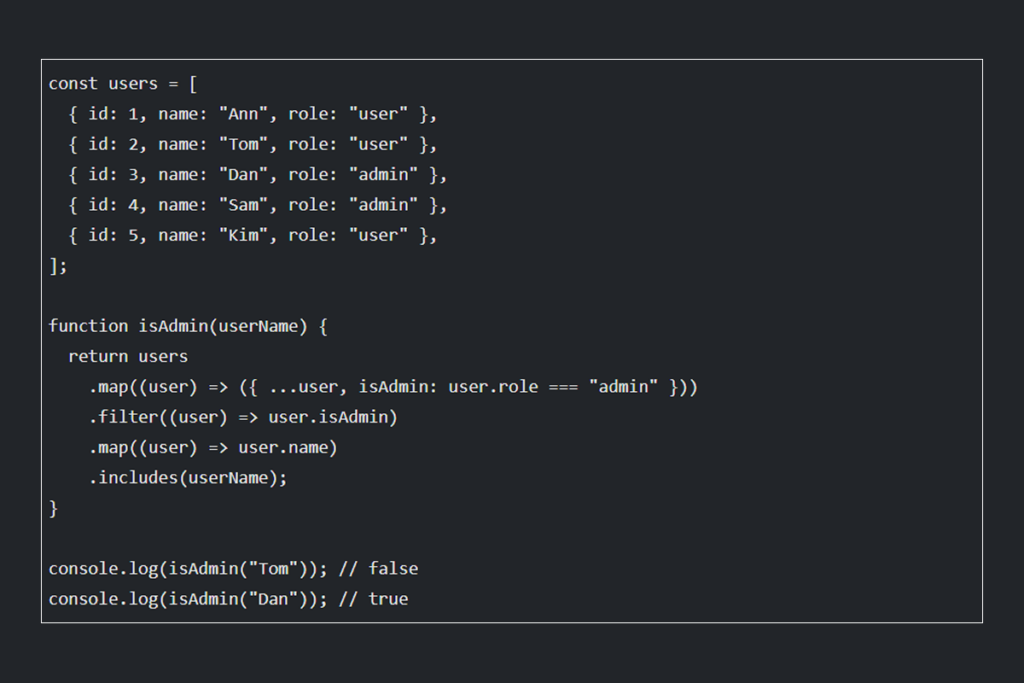
Possible line of thinking may be as follows:
- Most candidates may consider the ‘map’ call to be excessive and simply skip it to focus on the ‘filter’ call.
- Most candidates cannot highlight that the code is simply unoptimized and do not provide any idea about how to optimize it.
- Even fewer can provide a workable solution for the task, including a shorter backtrace using the array method.
- A true gem will provide a single-line solution.
So, it’s feasible to train on similar code samples and learn how to explain them. As a result, a headhunter gets a clear vision of your skills in reading and understanding the code.
Task 2
The next task helps HRs to understand the line of thinking of a candidate. Its essence is to ask a candidate to create a SemVer version sorting function by placing it in a proper order. Here is how the initial list of versions looks (1), and how it should be presented by a candidate (2).
1.
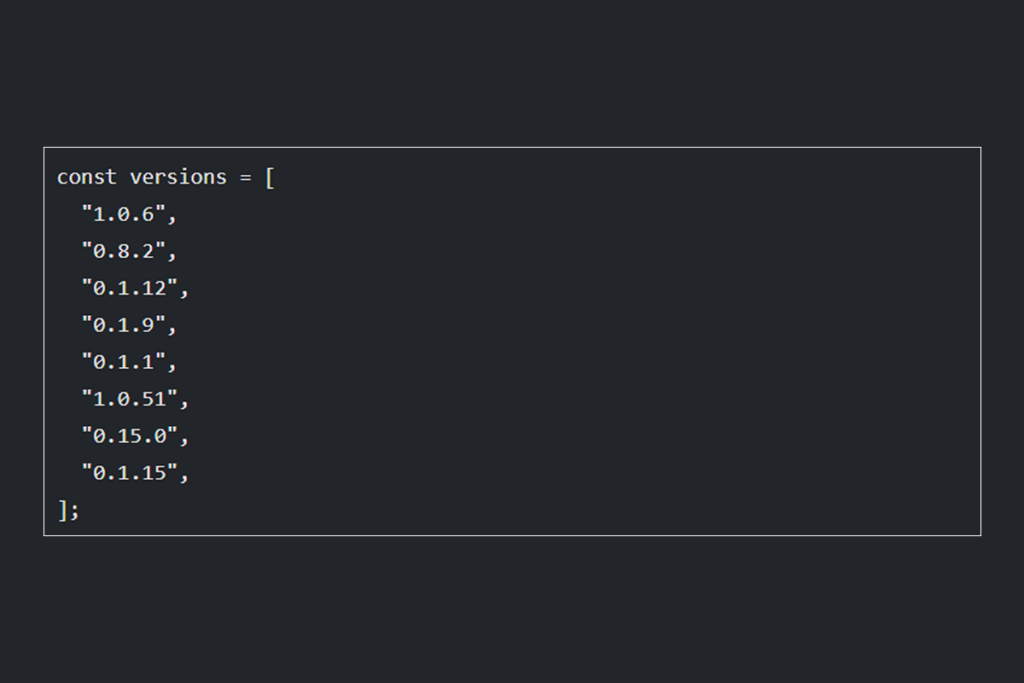
2.
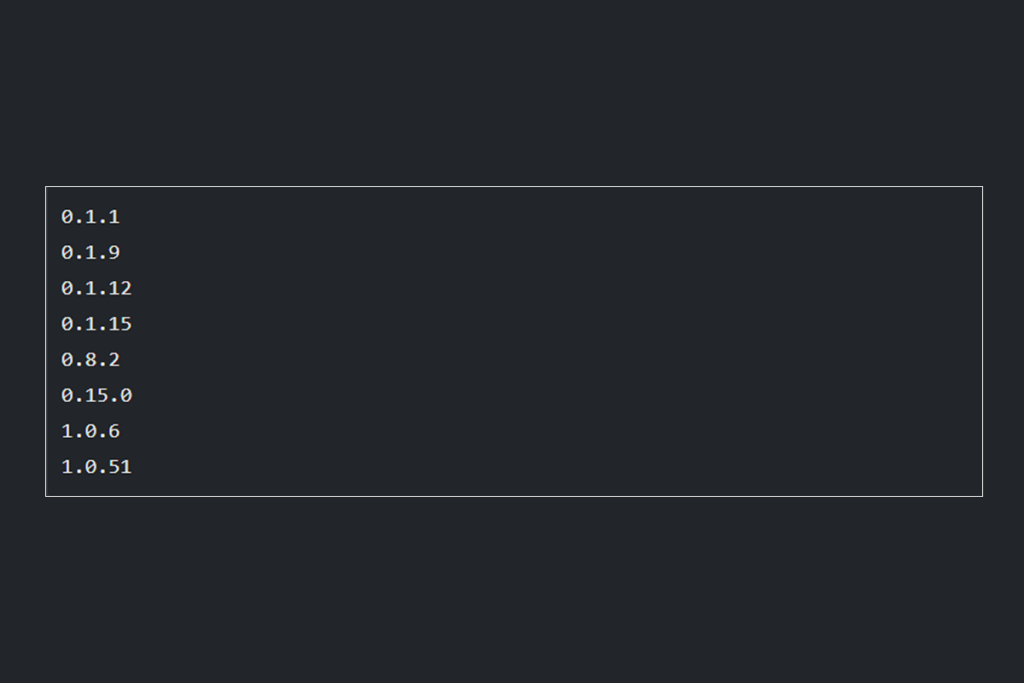
For this author’s task, created by Dmitry Gryshchenko, Incode Group’s tech lead for JavaScript Juniors’ interviewing, the way of the candidate’s thinking may be as follows:
- The main idea of most candidates is that a standard JavaScript line sorting doesn’t work in this case.
- Then most candidates may think logically that the version should be divided into elements: ‘major.minor.patch’, and then each element needs to be brought to a number.
- The main pitfall is writing conditional logic.
Your reliable helper in this task is explaining version sorting logic, like you would explain it to a kid. Typically, after that, the issue is easily solved, and your ability to explain and apply the explained logic in practice will be evaluated.
Task 3
The next task refers to the ability to understand the results of the code written and fix it. The question is: ‘What will be printed to the console when you run this code?’
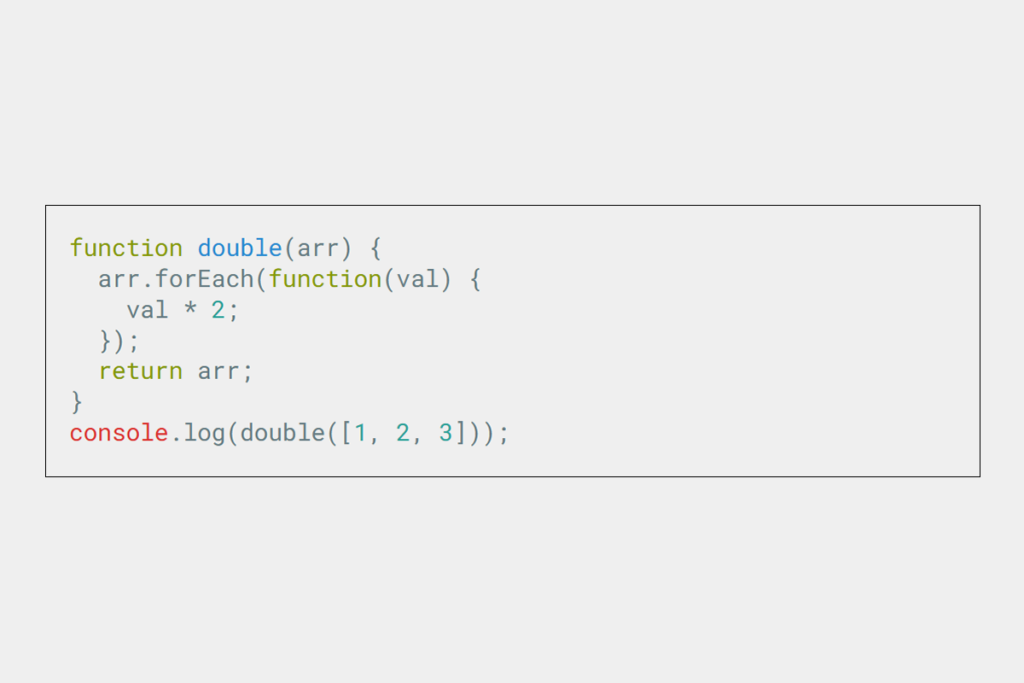
The expected answer is [1, 2, 3, 4]. So it’s your chance to practice with it to be ready for such questions in their various forms..
Task 4
The next question often asked during the interview is theoretical. It helps HRs to test the candidate’s ability to explain the JS theoretic part in simple words. So, you may be asked to explain the difference between ‘let’ and ‘const’ in JavaScript.
The correct answer is: ‘let’ is used to declare variables that can be reassigned, while ‘const’ is applied for non-reassignable variables. Similarly, it is better to refresh the core terms and definitions before the interview to provide precise and quick answers.
Task 5
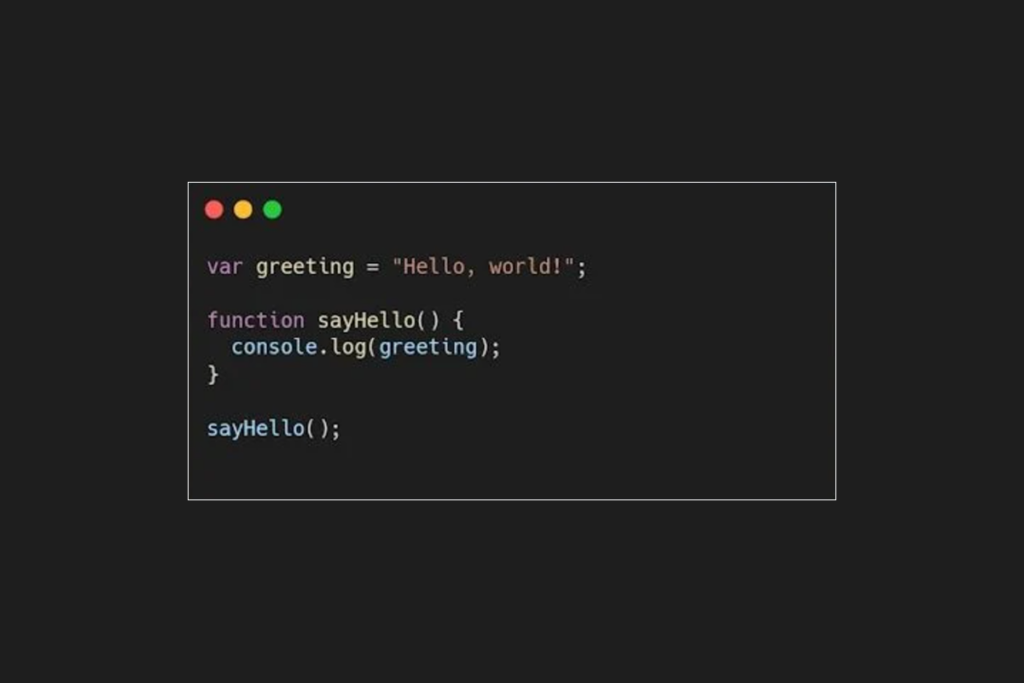
HRs often try to catch candidates in a trap by asking about some specific concepts. Understanding of hoisting in JavaScript is among such traps. You may be asked to explain the hoisting concept and bring the example of it.
- The correct answer may sound like ‘Hoisting in JavaScript is the process when declarations move to the top of their scope’.
- A more detailed explanation may include the following thesis: ‘As a result, variables and functions can be used before they are declared. And they can be used this way as long as they are declared before they are used as functions.’
- The answer that will lead you to a category of talents may include a practical explanation. For example, if you use the following code sample to illustrate how you understand hoisting and apply this concept in practice.
Task 6
One more question headhunters are prone to ask, even for juniors, is about transactions in JavaScript. So, if you are asked a question about what transactions are in JavaScript, and why developers need them, your answer’s logic may be as follows:
- The first level is to explain that database transactions help to maintain data consistency, integrity, and reliability when multiple operations are performed on a database.
- The next level of your answer shows your deeper understanding of the essence of Streamline as a guarantee of ACID (Atomicity, Consistency, Isolation, and Durability), especially in cloud-based distributed databases.
- However, the most complete answer may include the example of how database transactions help preserve data from inconsistency in the case of crashes or breakdowns. You may use an explanation that a database transaction considers all operations provided for a database as a single logical unit, and if any of the operations fail, the whole unit is rolled back. The practical example of its implementation is as follows:
Imagine that you have a banking system, and you need to transfer $10 from account A to account B. The algorithm is:
1. Deducting $10 from account A.
2. Adding $10 to account B.
If the system fails on any of these steps, data becomes inconsistent. If we apply a database transaction, this algorithm works as a single unit, and if both steps are executed properly, the transaction is committed. If any step fails, both steps roll back. Data remains consistent and accurate.
Task 7
At last, one of the most loved by interviewers’ questions to the applicant for a Junior JS developer is ‘Why do we need to use Promise.all() instead of using several await statements in a row?’
How would you answer it? We suggest that you provide a brief answer, so that when we have a sequence of functions that need to be completed, both methods work. However, using several await statements for each function in a sequence makes the process of performance slower yet more understandable because, in this case, JavaScript waits for each Promise to resolve before running the next function, and they are run consequently. The statement Promise. all allows to initiate all the functions in the sequence simultaneously, and JavaScript waits for all Promises to resolve before further running. This makes the coding process faster but introduces risks of error handling. Besides, it doesn’t suit functions that depend on others.
If you want to provide a deeper answer, you may notice that it is feasible to run await for functions that depend on another, and to run Promise.all for independent functions that can be completed in parallel.
Bottom Line
Once you get an interview appointment, you can start preparing for it. Besides learning these 7 questions, we also recommend that you recall the basics about the array method and its principles, re-check your knowledge in scope vs hoisting approaches, and code closures sorting. We do not insist on using our code samples for your interview answers. It would be even better if you prepare some author’s examples, because they may quickly convince the interviewer that you are their best choice. So, cheer up and get ready for your job application interview with ease.